 By
By 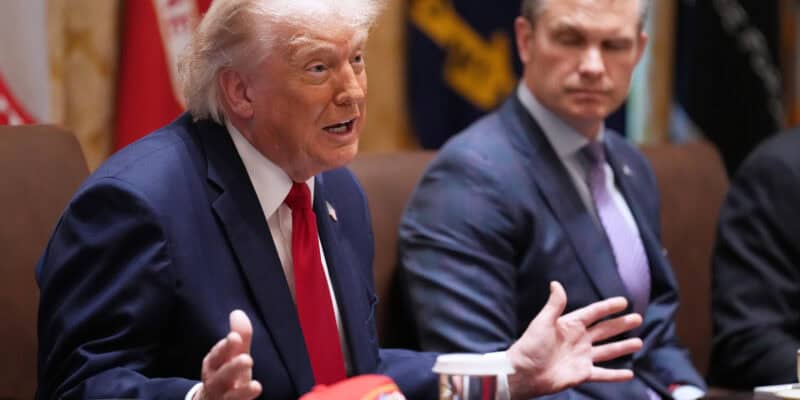
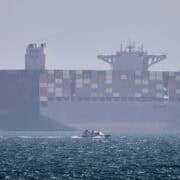
The Trump administration on Wednesday placed additional sanctions on Iran as part of a sprawling economic pressure campaign during the war, this time targeting the country’s newly created agency that is trying to control shipping through the Strait of Hormuz.
The sanctions were announced late Wednesday after U.S. forces carried out strikes on an Iran military facility after downing Iranian attack drones, according to U.S. officials who were not authorized to comment publicly and spoke on the condition of anonymity.
The sanctions move, first reported by The Associated Press, is the latest U.S. effort to use economic leverage on top of military action to push Iran’s leadership into an agreement to end the war and open the waterway where a fifth of the world’s oil and natural gas normally passes. President Donald Trump has said a deal is imminent, but talks are ongoing.
Rising energy prices and other costs stemming from Iran’s effective closure of the strait have heaped political pressure on Trump and other Republicans ahead of the midterm congressional elections.
“The Iranian military’s latest attempt to extort global maritime trade is proof that Economic Fury has left the regime desperate for cash,” Treasury Secretary Scott Bessent said in a statement.
The sanctions target Iran’s Persian Gulf Strait Authority and any person or entity cooperating with the agency, announced earlier this month, that approves transit in the strait and charges tolls that could reach as high as $2 million per vessel.
Iran’s powerful paramilitary Revolutionary Guard has defended this oversight effort, saying the only safe route for transit through the critical waterway is through the corridor it has designated and saying any ships that deviate from that path face a series of attacks and risks.
Iran’s chokehold on the strait has caused worldwide energy shocks and followed the U.S. and Israel launching the war on Feb. 28. Prices have spiked for oil, gas and related products, and experts say it would take several weeks or even months for shipping and prices to recover once the waterway reopens.
In turn, the U.S. has blockaded Iranian ports for over a month, and Trump said it “will remain in full force and effect until an agreement is reached, certified, and signed.”
The latest economic penalties come as Washington and Tehran have been engaged in some of the most intense diplomacy and negotiations in years, aimed at bringing an end to the war and a pathway for a longer-term solution to issues between the longtime adversaries.
Trump said Wednesday that Iran is “negotiating on fumes” and said the sides are closing in on a deal even after the U.S. military said Monday that it had carried out “self-defense” strikes on missile launch sites and boats placing mines. Wednesday’s strikes are likely to cause more complications.
“They want very much to make a deal,” Trump said at a Cabinet meeting Wednesday. “So far, they haven’t gotten there. We’re not satisfied with it, but we will be — either that or we’ll have to just finish the job.”
The Republican president also has reiterated his warning that fighting would resume if no deal is reached but has pulled back from those threats several times now in the last few months.