 By
By 
NEW YORK (AP) — Most stocks are falling on Wall Street Thursday, as oil prices rise further, but the moves are less severe than earlier in the week.
The S&P 500 slipped 0.2% in morning trading, coming off a frenetic start to the week that saw financial markets worldwide swerve sharply, sometimes hour by hour. The Dow Jones Industrial Average was down 452 points, or 0.9%, as of 10:15 a.m. Eastern time, and the Nasdaq composite was 0.1% higher.
Markets again seem to be following the cue of oil prices. Worries are high that a long-term spike because of the war with Iran could exhaust households’ ability to spend, as well as grind down the global economy and push interest rates higher.
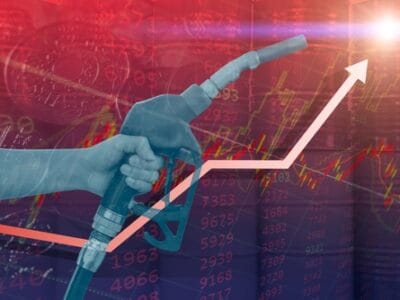
A barrel of Brent crude, the international standard, rose 2.9% to $83.74. That’s up from close to $70 late last week. A barrel of benchmark U.S. crude climbed 4.6% to $78.15.
Oil prices rose after Iran launched a new wave of attacks against Israel, American bases and countries around the region. The war’s escalations are raising worries about how long disruptions could last for the production and transport of oil and natural gas in the region.
Prices at U.S. gasoline pumps have already jumped because of it. The average price for a gallon is $3.25, up 9% from $2.98 a week ago, according to auto club AAA.
To be sure, the U.S. stock market has a history of bouncing back relatively quickly following conflicts in the Middle East and elsewhere. That has many professional investors suggesting patience and riding through the market’s swings.
“While further escalation remains a risk, we think the more likely outcome is an increase in market risk aversion that likely lasts only a short time until investors can see a winding down of hostilities,” according to Scott Wren, senior global market strategist at Wells Fargo Investment Institute.
But if oil prices spike, like to $100 per barrel, and stay there, it could be too much for the global economy to stomach. Uncertainty about that has caused this week’s sharp swings, and much will depend on what happens with the Strait of Hormuz. Roughly a fifth of the world’s oil typically sails through the narrow waterway off Iran’s coast.
Stocks of retail chains fell to some of the U.S. market’s worst losses on Thursday. High gasoline prices mean their customers would have less to spend on other things.
American Eagle Outfitters fell 12.4% even though it reported stronger profit and revenue for the latest quarter than analysts expected.
Airlines also took sharp losses. Higher oil prices are increasing their already big fuel bills, while the war has also left passengers stranded across the Middle East.
American Airlines lost 4.4%, United Airlines fell 4.8% and Delta Air Lines sank 4.5%.
Wall Street’s losses would have been worse if not for Broadcom. The chip company’s stock rose 4.8% after it reported stronger profit and revenue for the latest quarter than analysts expected.
It’s one of Wall Street’s most influential stocks because it’s one of the biggest by total value, and CEO Hock Tan said it benefited from a 74% jump in revenue for AI chips.
In the bond market, Treasury yields jumped as rising oil prices put more upward pressure on inflation, which could keep the Federal Reserve from cutting interest rates.
The yield on the 10-year Treasury rose to 4.12% from 4.09% late Wednesday and from just 3.97% before the war with Iran started.
The Fed could keep interest rates high to keep a lid on inflation. But high interest rates would also keep it more expensive for U.S. households and companies to borrow money, grinding down on the economy.
The central bank had indicated it planned to resume its cuts to interest rates later this year, in hopes of giving a boost to the job market and economy. Because of the war and higher oil prices, traders have pushed their forecasts further into the summer for when the Fed could begin cutting rates again.
Several reports on the U.S. economy also came in mixed.
One said fewer U.S. workers filed for unemployment benefits last week than economists expected. That’s an encouraging signal for the job market.
A second report said productivity for U.S. workers slowed sharply at the end of last year. That could be a discouraging sign for the economy because high productivity allows wages to rise for workers without putting upward pressure on inflation. But economists said last quarter’s numbers were affected by the U.S. government shutdown.
In stock markets abroad, indexes rebounded in Asia following historic losses a day before. South Korea’s Kospi jumped 9.6% to recover much of its 12.1% plunge from Wednesday, which was its worst loss ever.
But indexes fell in Europe as oil prices began to accelerate. France’s CAC 40 fell 0.4%, and Germany’s DAX lost 0.4%.
___
AP Writers Kim Tong-hyung and Elaine Kurtenbach contributed.